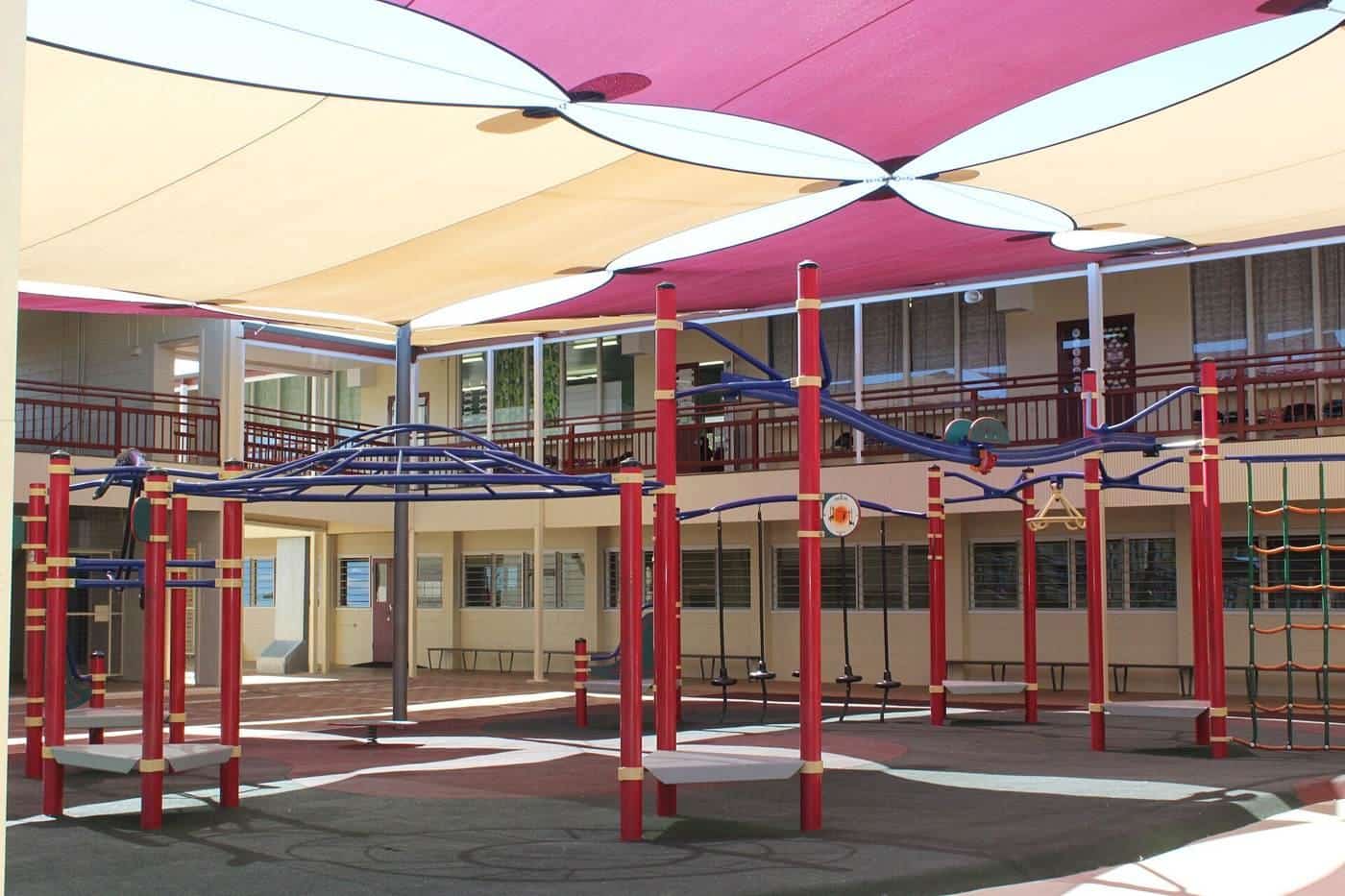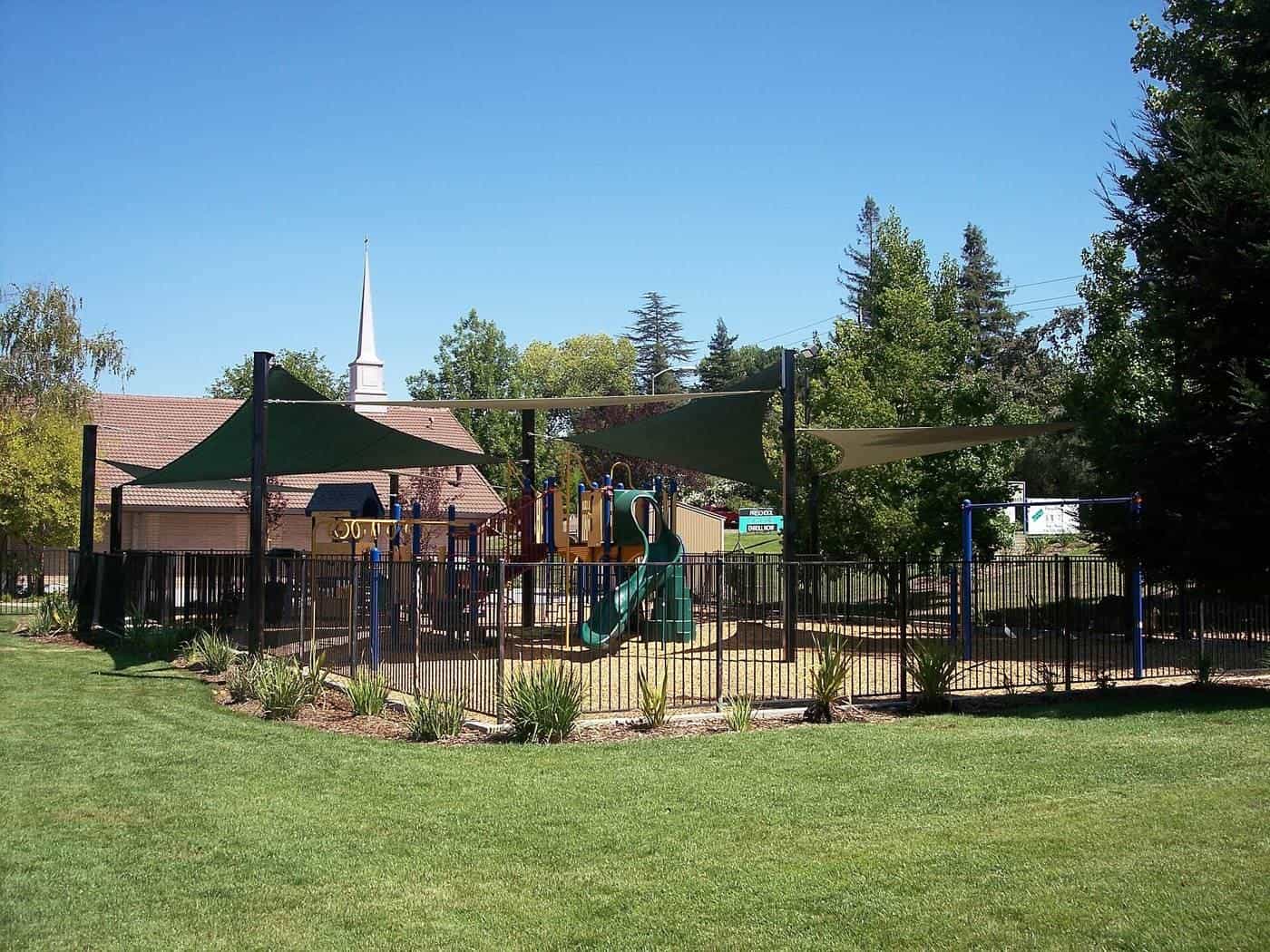
Shade sails are everywhere in Australia: over school playgrounds, car parks, swimming pools, cafés and backyards. They are popular because they shade large areas at a lower cost than a solid roof, let light and air through and look good. They are also often installed badly. A sail fixed to a gutter, a post without a proper footing or a sail left loose can fail in strong wind, damaging property and putting people at risk.
How shade sails work
A shade sail is a tensioned fabric panel, usually triangular, square or rectangular, fixed at each corner to a post, wall or structure. Tension keeps the fabric taut, stops it flapping and spreads wind loads to the fixing points. Those loads can be large, because a sail behaves like a sail on a boat: wind pushes and lifts the whole surface.
Tension
Keeps sails stable
Loose sails flap and fail
Twist
Adds strength
And sheds water
Fixings
The critical part
Design for wind
Shapes and layouts
Triangles are simple and versatile, and overlapping triangles create attractive layouts.
Squares and rectangles cover more area for their size, but need more fixing points and careful tensioning.
Twist (hypar). Setting corners at different heights creates a twisted, saddle shape. This adds strength, helps water run off and looks good.
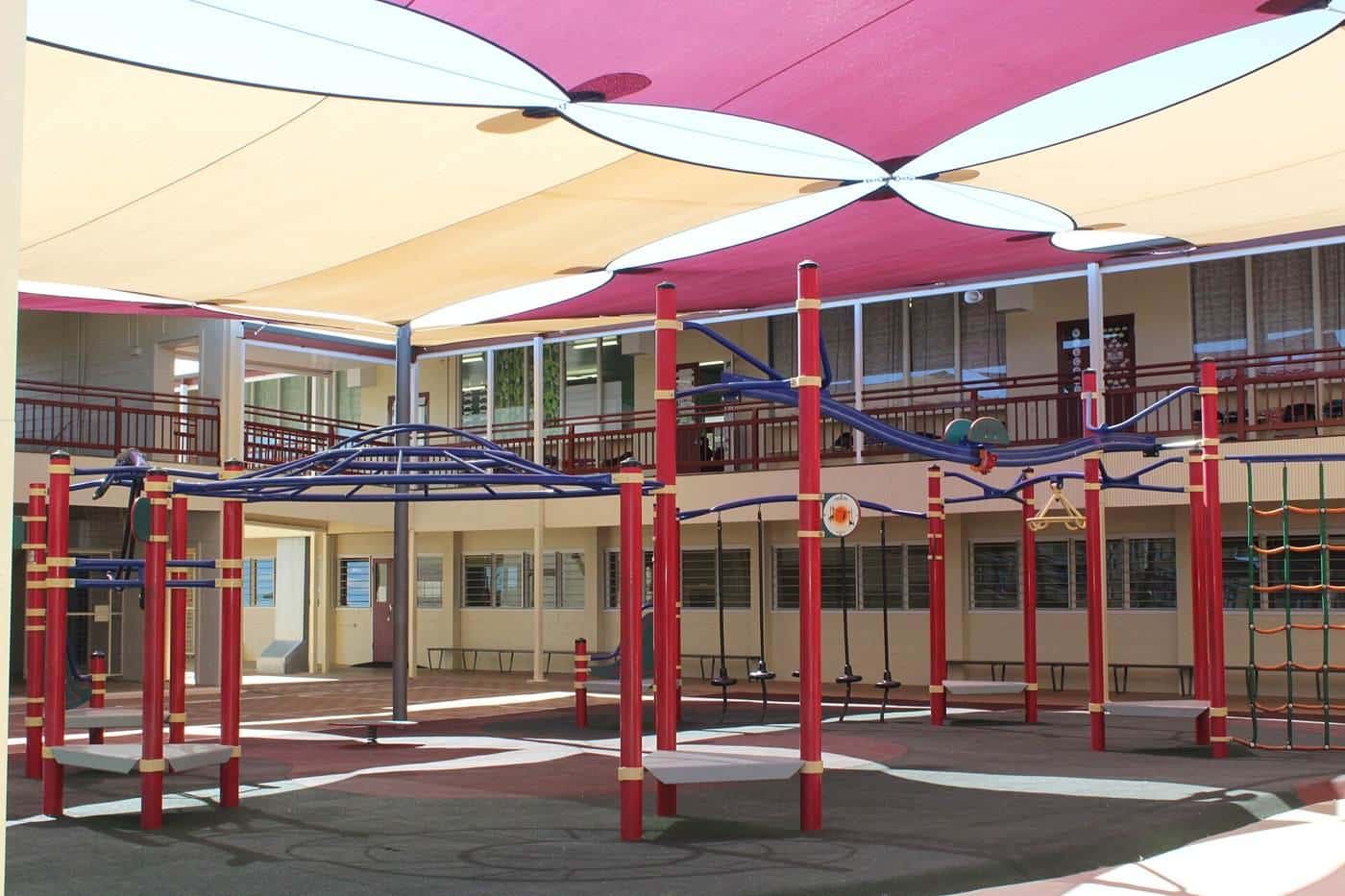
Multiple sails. Overlapping sails at different heights can cover irregular areas and block more of the sky.
Fabric
Most sails are made from knitted high-density polyethylene (HDPE) shade cloth, which lets air and water through. Fabrics vary in UV block, cover factor, strength and colour. Waterproof fabrics, often PVC-coated, keep out rain but trap water, so they need a steep fall and stronger fixings. See shade cloth and UPF ratings for how fabrics are rated.
Colour affects light and heat: darker colours often block more UV and glare but may feel warmer underneath, while lighter colours let more light through.
Posts, footings and fixing points
The fixing points carry all the load, so they're the most important part of the installation.
Posts. Steel posts in concrete footings are common. The post size, wall thickness, depth and footing size depend on the sail size, height and wind loads. Posts are often angled slightly away from the sail to resist the pull.
Walls and buildings. Some walls and structures can take a sail fixing, but fascias, gutters and many walls weren't designed for it. Get advice from an engineer or experienced installer.
Trees. Trees move and grow, and fixings can damage them. Most installers avoid using trees as fixing points.
Fittings. Use marine-grade stainless or galvanised turnbuckles, shackles, pad eyes and wire, rated for the loads.
Before digging, lodge a free Before You Dig Australia enquiry to locate underground services.
Tensioning
A sail should be tight enough not to flap or sag, but not over-tensioned. Use turnbuckles or tensioning systems at the corners and follow the manufacturer's instructions. Re-check tension after the first few weeks, because fabric can stretch. A flapping sail wears quickly and puts shock loads on fixings.
Water run-off
Even permeable sails can hold some water in heavy rain. Install sails with enough fall so water runs off, and avoid flat sails. With waterproof sails, plan where the water goes.
Wind and storms
Sails can face very large loads in strong wind. Many manufacturers and installers recommend taking sails down when storms, cyclones or very strong winds are forecast. In cyclonic regions, design requirements are stricter, and many sails are designed to be removed before cyclones. Check Bureau of Meteorology warnings.
Approvals
Shade sails can need planning or building approval depending on size, height, location and state rules. Some small sails may be exempt if they meet set conditions. Large sails, sails close to boundaries and sails on commercial sites often need approval. See council approval.
Care
- Hose off dust, leaves and bird droppings, and clean with mild soap and water.
- Check fittings, turnbuckles and tension regularly.
- Check posts and footings for movement and corrosion.
- Remove the sail before severe weather, and store it clean and dry.
Planning a shade sail
0 of 8 done
Ticks are saved in this browser only.
Common mistakes
- Fixing a sail to a gutter or fascia.
- Undersized posts or shallow footings.
- Installing a sail flat so water pools.
- Leaving a sail up in a cyclone or severe storm.
- Expecting a permeable sail to keep out rain.
Shade sails and sun safety
Sails can block a lot of UV, but scattered and reflected UV still reach people underneath, especially under high sails with open sides. Cancer Council recommends combining shade with clothing, hats, sunscreen and sunglasses. Lower, overlapping sails give better protection. See sun protection under shade.
DIY or professional?
Small sails on existing sturdy structures are sometimes installed by homeowners, but larger sails, new posts and anything over play areas, pools or public spaces are best designed and installed by professionals. An installer can advise on wind loads, footings and approvals and should provide documentation.
Planning the layout
Before buying, map the area you want to shade and watch how the sun moves across it through the day and across the seasons. Mark where people sit, play or park, and where fixing points could go. Remember that a sail's shadow moves away from the sail as the sun gets lower. A sail positioned slightly to the west of an outdoor area will shade it better in the afternoon. Several overlapping sails at different heights can follow the sun better than one large flat sail.
Choosing an installer
Ask installers about their experience, how they calculate wind loads and footing sizes, what fittings and fabric they use, whether they handle approvals and what warranties they offer on the sail, the fittings and the installation. Ask for written quotes that specify post sizes, footing dimensions and fabric, and check any licences required in your state. Get more than one quote.
Sails over pools and play areas
Over pools, posts and footings must not compromise the pool barrier or create climbable objects near it, and fittings should be checked regularly because chlorinated or salt water and splashing can speed up corrosion. Over play areas, keep posts clear of equipment, pad or position them to reduce injury risk, and choose a high UV-block fabric so children get the best protection.
Key points
Shade sails are affordable shade for large areas, but they put big loads on fixings. Use engineered posts and footings, avoid gutters and trees, tension properly, install with fall, check approvals and take sails down before severe weather.
Frequently asked questions
Are shade sails waterproof?
Most shade sails are made from knitted shade cloth that lets water through. Waterproof sails exist, but water can pool on them, so they need a steep fall and stronger fixings.
Can I attach a shade sail to my house?
Sometimes, but fascias, gutters and many walls aren't designed for the loads a sail creates. Get advice from an engineer or experienced installer before fixing to a house.
How tight should a shade sail be?
Tight enough that it doesn't flap or sag, following the manufacturer's guidance. A loose sail flaps, wears quickly and can collect water, while over-tensioning can damage the sail and fixings.
Should I take my shade sail down in winter?
Many people take sails down before storms, cyclones or long periods without use, which reduces wear. Follow the manufacturer's advice.
Do I need approval for a shade sail?
It depends on your state, council and the sail's size, height and location. Check the rules before installing.
Sources and further reading
Facts on this page were checked against these primary and official sources. Conditions change — confirm before you travel or buy.
- Shade structure — Wikipedia
- Exempt development — NSW Planning Portal
- Be SunSmart — Cancer Council Australia
- Before You Dig Australia — BYDA
- Wind warnings — Bureau of Meteorology