Shade cloth is sold with numbers that look simple: 50%, 70%, 90%, UPF 50+. But those numbers don't always measure the same thing, and the difference matters if you're buying shade for people rather than plants. This guide explains the main ratings, the Australian standards behind them and how to choose the right fabric.
What shade cloth is
Most shade cloth is knitted high-density polyethylene (HDPE) with UV stabilisers to slow degradation in sunlight. The knit lets air and water through, which keeps the space cooler and reduces wind load compared with a solid fabric. Shade cloth is used for sails, garden shade houses, fences, screens, carports and the roofs of some structures. Pop-up gazebo canopies are usually a different material, coated woven polyester.
Cover factor
Light blocked
Not the same as UV
UPF 50
About 98% UV blocked
1/50 passes through
AS 4174
Shade cloth standard
AS/NZS 4399 for UPF
Shade factor, cover factor and UV block
Shade or cover factor describes how much of the light, or how much of the area, the cloth blocks. A 70% shade cloth blocks roughly 70% of the light.
UV block describes how much UV radiation the cloth blocks. For the same cloth, UV block is often higher than the shade factor, because of the knit and the UV stabilisers and pigments in the fibres.
Because sellers quote either figure, a "90%" label on one product may not mean the same as on another. Look for a clear statement of what the percentage measures and how it was tested.
UPF
The Ultraviolet Protection Factor (UPF) rates how much UV gets through a fabric. A fabric rated UPF 50 lets through about one-fiftieth of UV, so it blocks about 98%. UPF ratings for sun-protective clothing and fabrics in Australia are covered by the standard AS/NZS 4399, and ARPANSA offers testing for UPF. UPF 50+ is the highest rating category.
UPF ratings are most common for clothing, hats and some shade fabrics and canopies. A canopy with a UPF rating gives you a useful comparison, but remember that the rating applies to the fabric itself. Under a shade structure, scattered and reflected UV can still reach you from the sides and below. See sun protection under shade.
Australian standards
AS 4174 sets requirements for synthetic shade cloth, including how its properties are tested and described.
AS/NZS 4399 sets out how sun-protective clothing and fabrics are tested and classified for UPF.
A product that says it is tested to a standard, with documentation available, is more reliable than one with vague claims.
Colour
Colour affects UV block, light and heat. For the same knit, darker colours often block more UV and glare. Lighter colours let more light through and can look brighter underneath. Manufacturers usually publish UV block for each colour, and it can vary noticeably between colours in the same range.
Choosing shade cloth for people
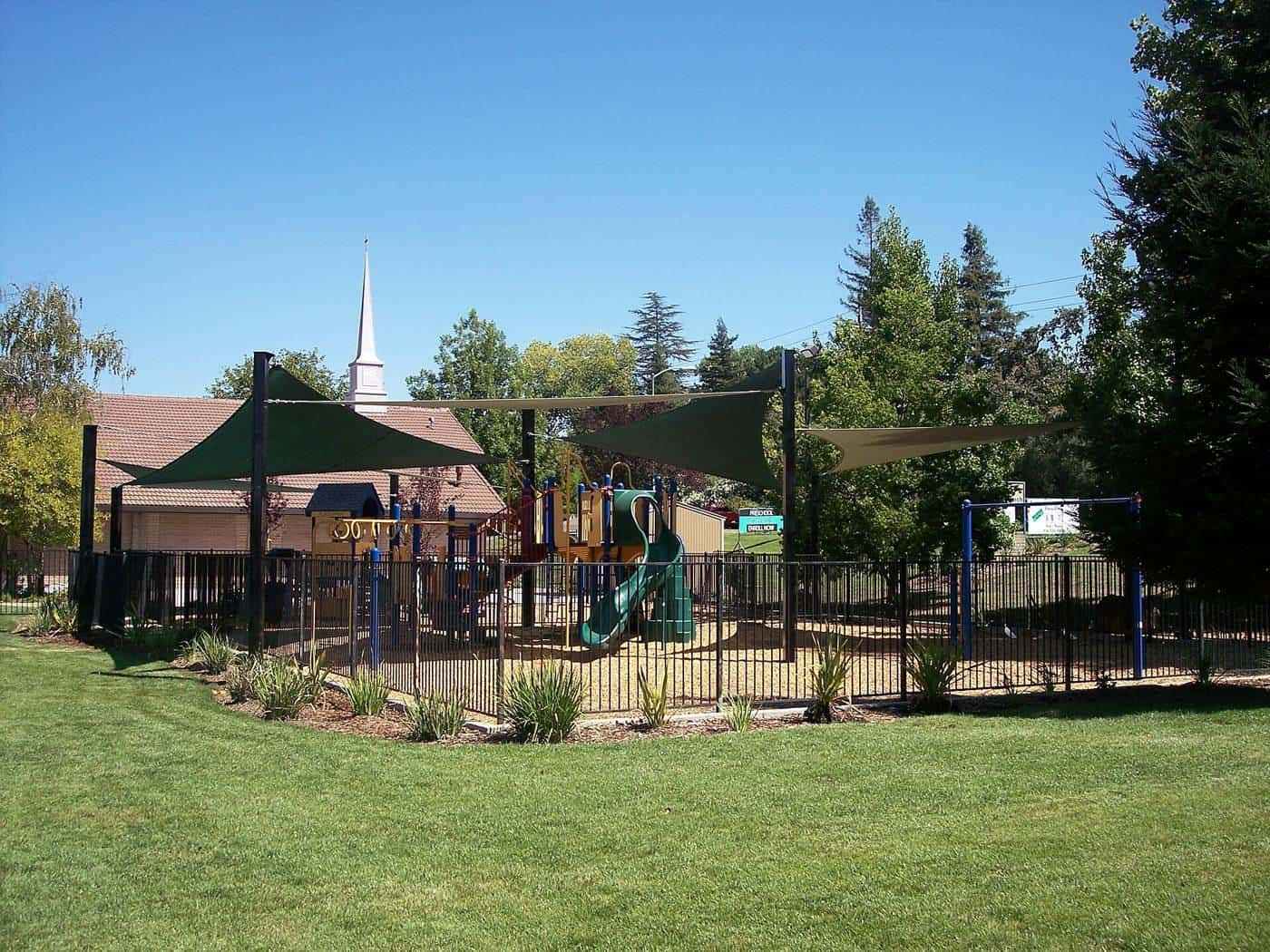
For shade over people, such as sails, play areas and patios, choose a high UV block. Check the stated UV block or UPF rating for your chosen colour, and compare products on the same measure. Durability matters too: a cloth that degrades quickly in sun will lose strength and protection.
Choosing shade cloth for plants
Plants need light, so gardeners usually choose lower shade factors for vegetables and most plants, and higher ones for ferns, orchids and shade-loving plants, or to protect seedlings in hot weather. Check what your plants need.
Canopies and gazebo fabrics
Pop-up gazebo canopies are usually coated polyester rather than knitted shade cloth. The coating blocks light, water and UV. Many canopies claim UV protection, and some quote UPF. Coatings wear down over time, especially if the canopy is left in the sun, so protection may reduce as the canopy ages. See care and repair.
Durability and UV degradation
UV radiation breaks down plastics over time, which is why shade cloth contains UV stabilisers. Even so, all shade fabrics eventually fade, weaken and lose strength. Check warranty terms for UV degradation, and replace fabric that has become brittle or torn.
Choosing shade fabric
0 of 6 done
Ticks are saved in this browser only.
Common mistakes
- Treating shade factor as UV block.
- Choosing garden shade cloth for sun protection.
- Assuming all colours in a range block the same UV.
- Forgetting that scattered and reflected UV still reach you.
- Leaving fabric to degrade past its useful life.
Questions to ask suppliers
Ask suppliers what the stated percentage measures, how and where it was tested, what the UV block is for your chosen colour, what the fabric is made from, whether it is stabilised against UV, what the warranty covers and for how long, and whether it is suitable for sails or only for gardens and screens. Clear answers help you compare products on a fair basis.
Fabrics for different jobs
Shade sails over people. A sail-grade fabric with a high UV block, good strength and a long UV warranty.
Pergola roofs. Shade cloth can be fixed over rafters for filtered shade. Choose UV block for people and allow for drainage.
Garden shade houses. Lower shade factors suited to the plants grown.
Privacy screens and fences. Higher cover factors for privacy and wind reduction.
Gazebo canopies. Coated polyester with a stated UV or UPF rating, taped seams and reinforced corners.
How long shade cloth lasts
The life of shade cloth depends on the fabric, the UV stabilisers used, the colour, how tightly it is tensioned and how much sun, wind and abrasion it faces. A sail in full sun all year in northern Australia faces harsher conditions than a garden screen in a sheltered southern backyard. Manufacturers' warranties, especially for UV degradation, give an indication of expected life. Check fabric regularly for fading, brittleness and tears, particularly at the corners and edges.
Installing shade cloth on a frame
When fixing shade cloth over a pergola or frame, keep it evenly tensioned so it doesn't flap or sag and collect water. Fix it along the edges with suitable clips, battens or eyelets rather than staples through the fabric alone, and allow for drainage. Leave a small fall so water runs off. Check fixings after the first few windy days and re-tension if the cloth has stretched.
Key points
Shade cloth labels can quote cover factor or UV block, which are different. UPF rates the UV blocked by a fabric; UPF 50 blocks about 98%. Check colour-specific UV ratings and testing, choose high UV block for people and remember shade fabrics don't block scattered and reflected UV.
Frequently asked questions
What does a shade cloth percentage mean?
It may refer to the shade or cover factor, which is how much light the cloth blocks, or to UV block, which is how much UV it blocks. These are different figures, so check which one is quoted.
What is UPF?
Ultraviolet Protection Factor, a rating of how much UV a fabric blocks. A UPF 50 fabric lets through about one-fiftieth of UV, blocking about 98%.
Is darker shade cloth better?
Darker colours often block more UV and glare for the same knit, but they can feel warmer underneath. Check the stated UV block for each colour.
What shade cloth is best for plants?
Plants usually need lighter cloth that lets more light through. Gardeners choose lower shade factors for most plants and higher ones for shade-loving plants.
Which Australian standards apply?
AS 4174 covers synthetic shade cloth, and AS/NZS 4399 covers sun-protective clothing and fabrics, including UPF ratings.
Sources and further reading
Facts on this page were checked against these primary and official sources. Conditions change — confirm before you travel or buy.
- Ultraviolet protection factor — Wikipedia
- Sun protective clothing — ARPANSA
- Be SunSmart — Cancer Council Australia
- Shade cloth — Wikipedia