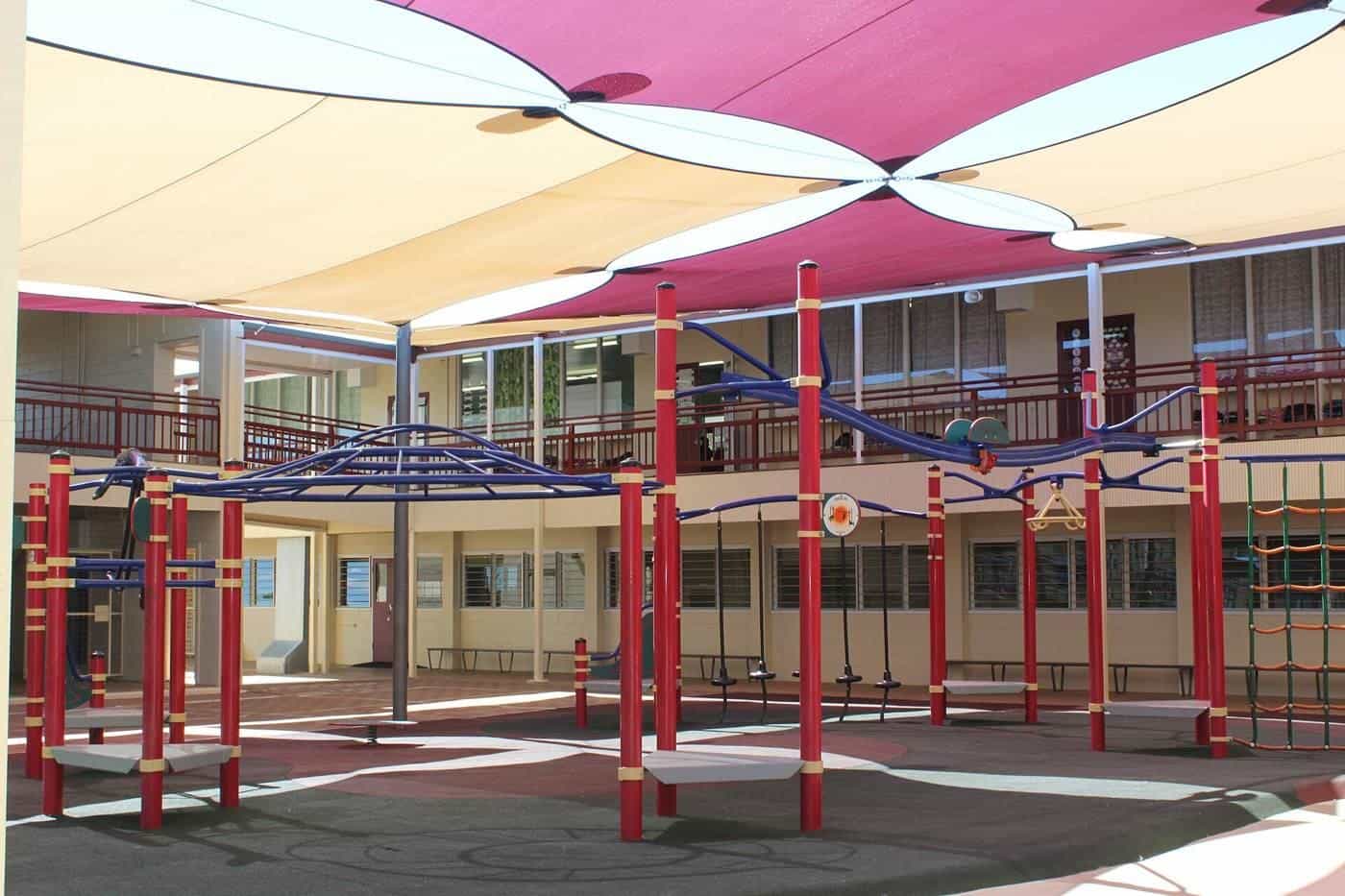
Australia has some of the highest levels of ultraviolet (UV) radiation in the world, and Cancer Council Australia describes skin cancer as one of the most common cancers in the country. Shade is a simple, powerful way to reduce UV exposure, which is why schools, councils and sporting clubs invest in shade sails and shelters. It is also widely misunderstood. Sitting under a gazebo or sail doesn't mean you are fully protected.
This section explains how shade fits into sun protection, and how to choose and use shade sails and shade cloth.
Guides in this section
- Sun protection under shade: the UV index, how shade works, reflected UV and the five SunSmart steps.
- Shade sails: shapes, fabrics, fixing points, tension and wind.
- Shade cloth and UPF ratings: what UV block percentages, UPF and the Australian standards mean.
UV 3+
Use sun protection
Cancer Council and ARPANSA
5 steps
Slip, slop, slap, seek, slide
Shade is one
Reflected UV
Still reaches you
Sand, water, concrete
How shade protects you
UV reaches you in three ways: directly from the sun, scattered from the sky and reflected from surfaces around you. Shade blocks direct UV and some scattered UV, depending on how much sky it covers. A narrow umbrella or a high sail with open sides leaves a lot of sky visible, so more scattered UV gets through. Reflective surfaces such as sand, water, snow and light-coloured concrete can bounce UV back up under the shade. That is why people can still get burnt at the beach under an umbrella.
Good shade is dense, wide enough to block a large part of the sky, and positioned for the time of day you will use it. Adding side walls or planting on the sunny side increases protection. See sun protection under shade.
The UV index
The UV index measures the strength of the sun's UV radiation. ARPANSA publishes real-time readings for major Australian cities, and the Bureau of Meteorology includes UV forecasts. Cancer Council and ARPANSA advise sun protection whenever the UV index is 3 or above, which in much of Australia covers most of the day for much of the year. Temperature is not a guide: UV can be high on cool or cloudy days.
Shade sails and shade cloth
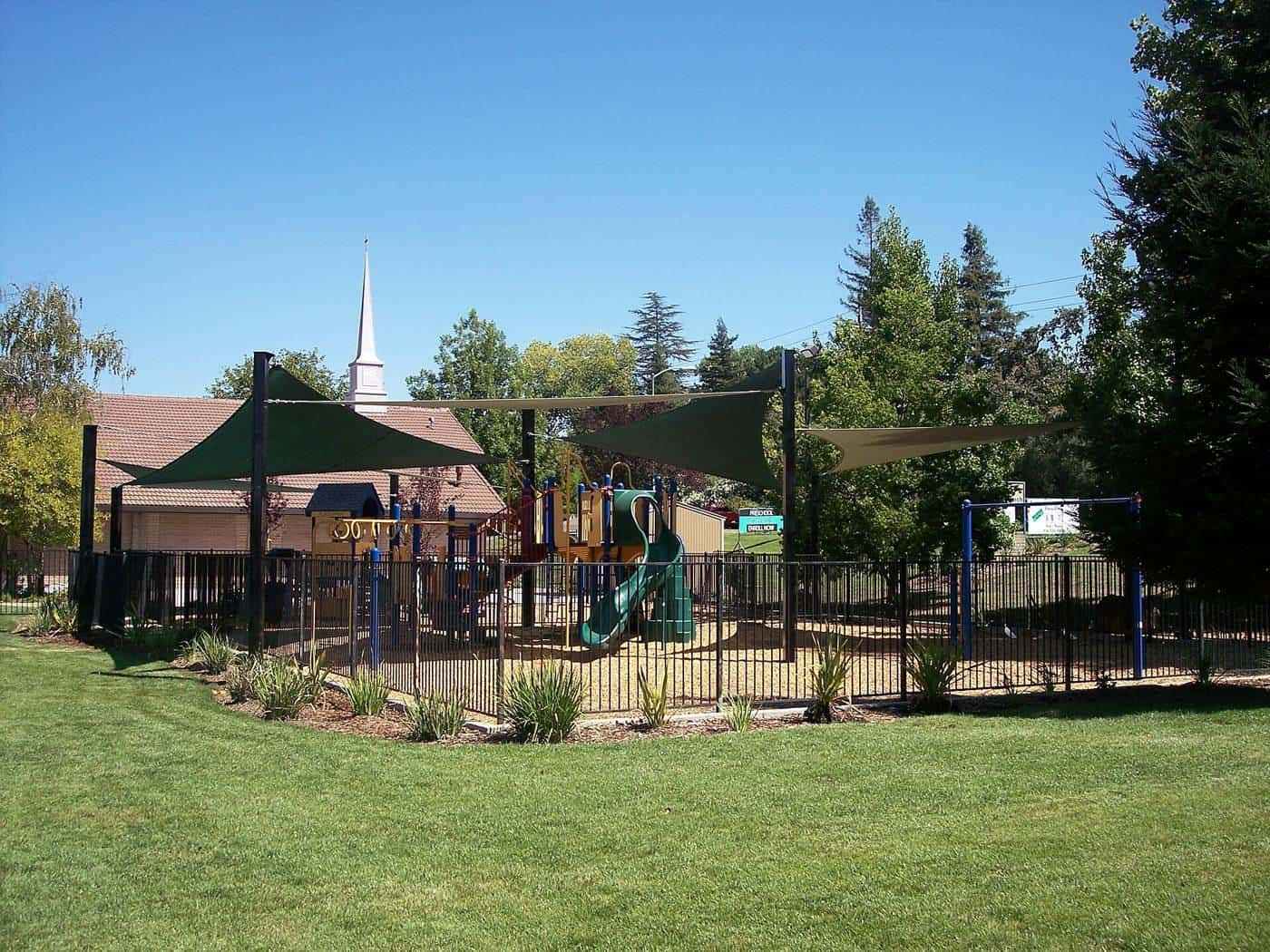
Shade sails are tensioned fabric panels fixed to posts, walls or other structures. They are popular because they cover large areas with light, attractive shade at a lower cost than a solid roof. They also put large loads on their fixings in wind, so posts, footings and fittings must be designed for them. Read our shade sails guide.
Shade cloth is the knitted fabric used in sails, garden shade houses and screens. It is rated by the percentage of UV it blocks, and Australian standards cover how shade cloth is tested and labelled. Read shade cloth and UPF ratings.
Designing better shade
- Cover the area people actually use at the times they use it.
- Allow for the sun's movement, especially low afternoon sun from the west.
- Choose dense fabrics and add side protection where practical.
- Avoid highly reflective surfaces under shade, or soften them with grass or mulch.
- Combine built shade with trees for long-term, cooler shade.
Shade at schools, clubs and workplaces
Cancer Council runs the SunSmart program for schools and early childhood services, which includes guidance on providing shade. Many councils and state governments have funded shade structures at schools, playgrounds and sports grounds. Employers have duties to manage the risks of UV exposure for outdoor workers under work health and safety laws, and Safe Work Australia publishes guidance on managing these risks, including shade.
Common mistakes
- Assuming shade alone is enough on a high-UV day.
- Putting a sail where it shades the lawn at noon but not the seats at 3 pm.
- Choosing a loose-weave cloth for sun protection.
- Ignoring reflection from water, sand and concrete.
- Forgetting that UV is high on cool and cloudy days.
Shade and heat
Shade does more than protect skin. It can make outdoor spaces noticeably cooler to sit in, reduce the temperature of play equipment, seats and paving, and cut heat gain through windows and walls. Many councils include tree canopy and shade targets in their urban heat plans, because shaded streets, parks and playgrounds are more usable on hot days. At home, shade over a west-facing patio or window can make a real difference to comfort inside and out.
Choosing between options
For a large, open area such as a playground or car park, sails are often the most practical. For a dining or living area that also needs rain protection, a roofed pergola or patio is better. For short-term use at events or the beach, a pop-up gazebo or shelter is the obvious choice. For long-term, cooler and more natural shade, plant trees, using built shade while they grow.
Shade for pets and outdoor workers
Shade matters for more than people's skin. Pets left outdoors need reliable shade and water through the hottest part of the day, and shade that moves with the sun can leave them exposed by afternoon. Outdoor workers spend long hours in the sun, so employers should plan shade for breaks and, where practical, for the work itself.
Key points
Shade is one of five sun-protection steps. Check the UV index, not the temperature, use dense, well-placed shade, watch for reflected UV and combine shade with clothing, a hat, sunscreen and sunglasses.
Guides in this section
Shade and sun
Sun protection under shade
How well gazebos, umbrellas and shade sails protect you from UV in Australia: the UV index, direct, scattered and reflected UV, and the five SunSmart steps.
Read · 5 min
Shade and sun
Shade sails
A practical guide to shade sails in Australia: shapes and twist, fabrics, fixing points, posts and footings, tensioning, water run-off, wind, care and approvals.
Read · 5 min
Shade and sun
Shade cloth and UPF ratings
What shade cloth and canopy ratings mean in Australia: UV block, shade or cover factor, UPF, the AS 4174 and AS/NZS 4399 standards, colour and choosing fabric.
Read · 5 min
Frequently asked questions
Does shade stop sunburn?
Good shade reduces UV exposure, but UV is also scattered by the sky and reflected from surfaces such as sand, water and concrete. Cancer Council recommends using shade with clothing, a hat, sunscreen and sunglasses.
What UV index needs sun protection?
Cancer Council and ARPANSA advise using sun protection when the UV index is 3 or above.
Does shade cloth block 100% of UV?
No. Shade cloths are rated by the percentage of UV they block, and even dense cloths let some UV through. Scattered UV also reaches you from the sides.
Do trees make good shade?
Dense trees can provide good shade, but the shade is patchy and moves through the day, and deciduous trees lose leaves in winter.
Where can I check the UV index?
ARPANSA publishes real-time UV levels for Australian cities, and the Bureau of Meteorology includes UV forecasts. Cancer Council's SunSmart app shows sun protection times.